

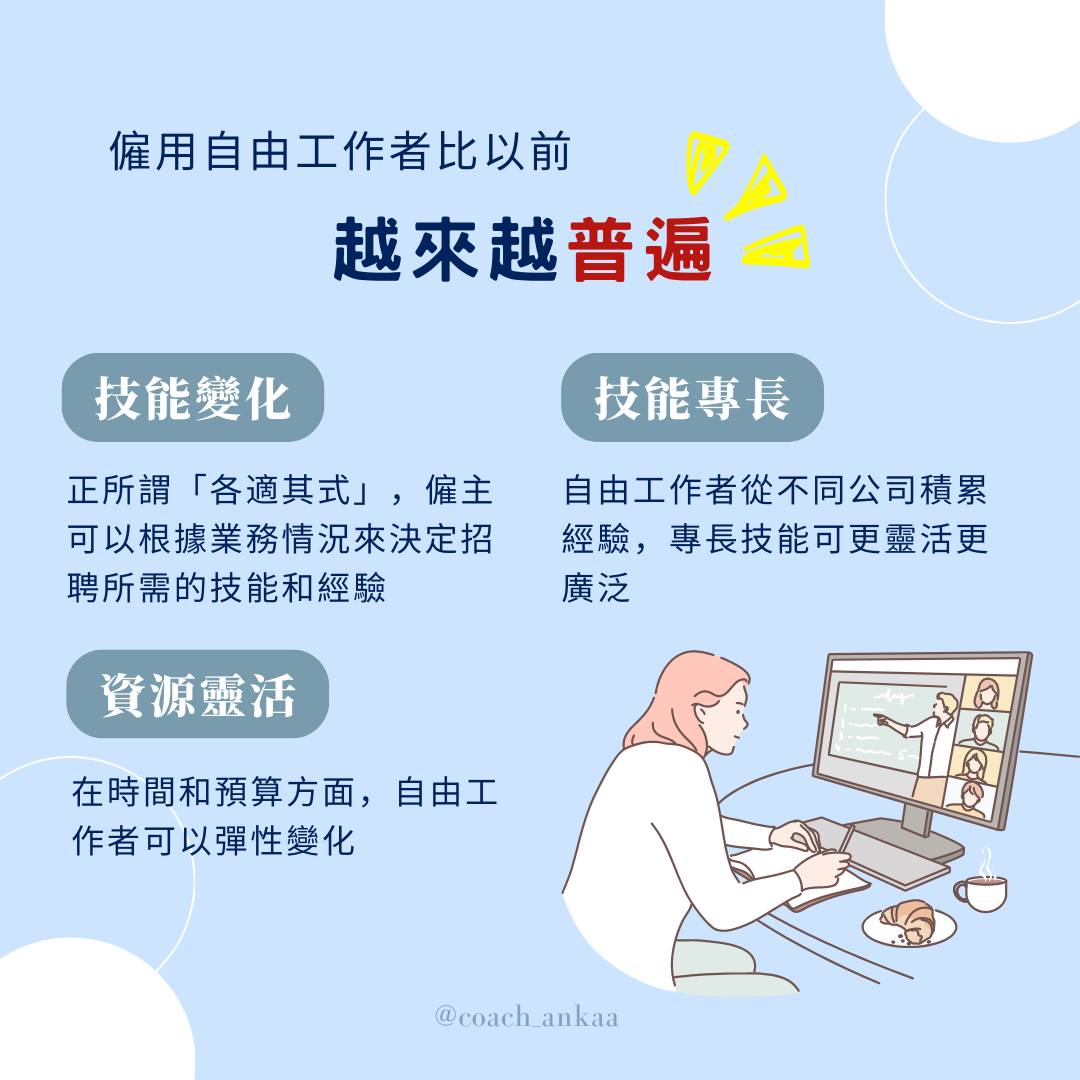
Employers can base on the business situation to decide on what level of skills and experience needed to hire for the business.
In terms of time and budget, freelancers can adapt to changing requests.
Freelancers may have accumulated different experiences from their wider work assignment exposure.

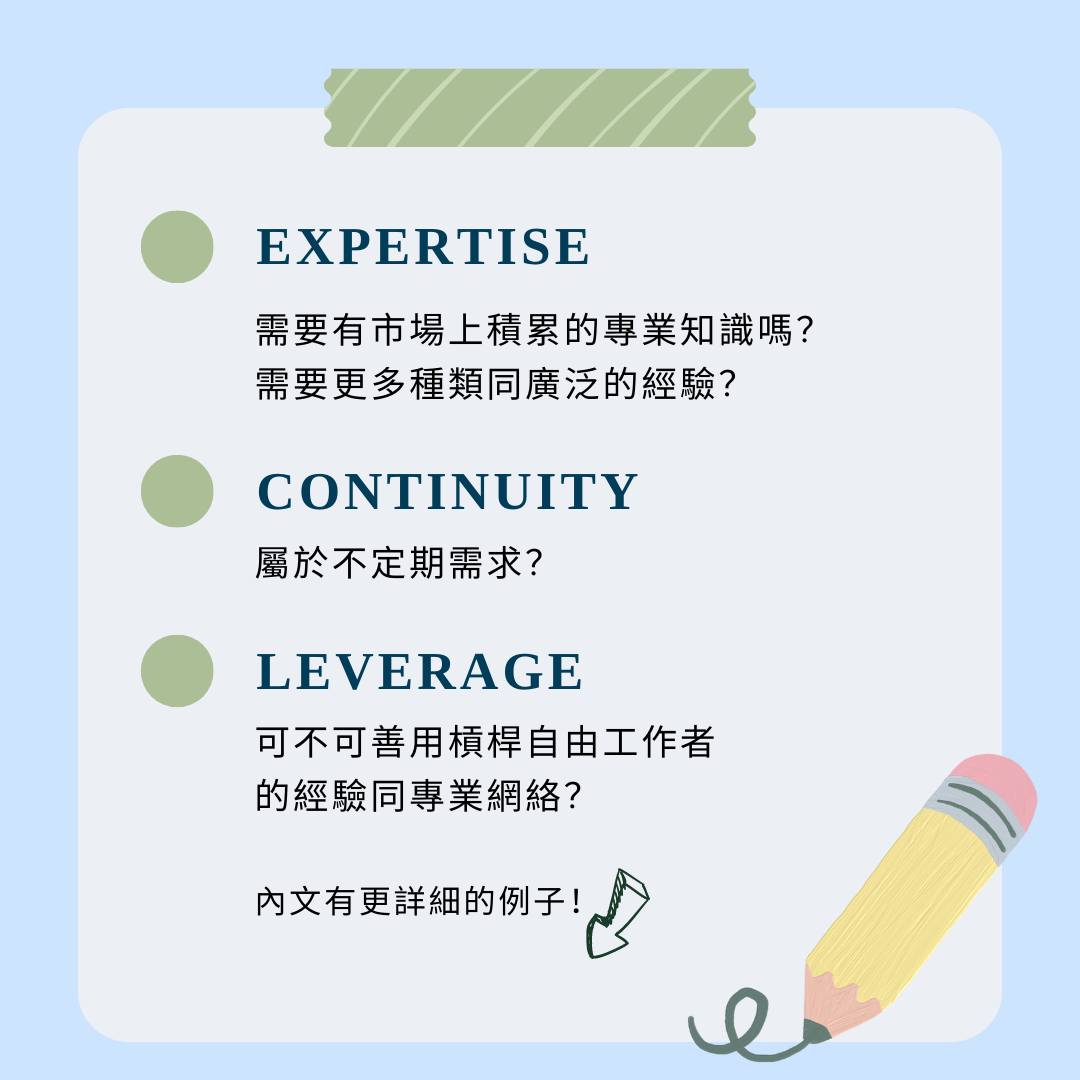
Eg. A restaurant owner who wants to offer more convenient ordering services or promote the business by setting up a company webpage, can hire an ad hoc technical support to design and develop the webpage, particularly if no internal personnel with the relevant professional knowledge and skills.
Eg. A beauty company plans for a project launching a new product. It will involve some creative works such as posters, advertisements, and web banners. These tasks can then be entrusted to a professional and experienced design and marketing company. As that marketing project is not a regular routine, outsourcing to freelancers can help to reduce production costs and increase efficiency.
Eg. When a company needs to conduct market research to collect information on competitors and target customers, getting freelancer support may be more advantageous as they typically have a wider range of experience and networks that may be better able to give market insights and perspectives. If they have established professional networks in the same industry, it will be easier for them to contact participants.